ADMiR Highlights Africa’s Disaster Innovation Future at 8th ASRIC Congress in Kenya
2025-11-08
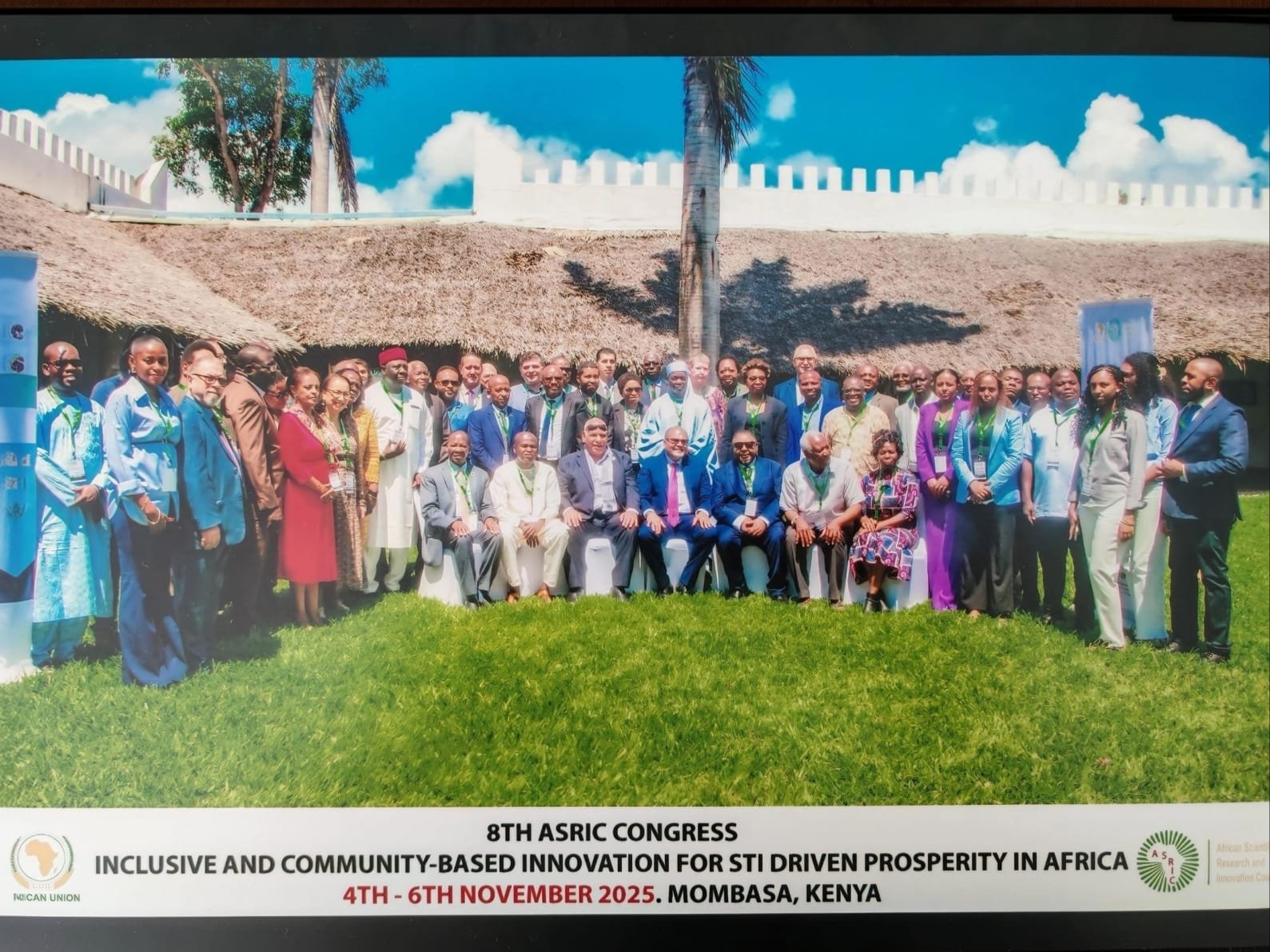
The African Union Scientific Research and Innovation Council (AU-ASRIC) successfully convened its 8th Congress in Diani, Mombasa, Kenya, from 4–6 November 2025, bringing together 54 expert delegates from across the continent. The Congress reviewed progress in its current work program and aligned its future plans with the newly adopted Science, Technology and Innovation Strategy for Africa 2034 (STISA-2034)—marking a renewed continental commitment to leveraging science and innovation for sustainable development.
Among the key highlights of the Congress was a presentation delivered by Prof. Mohamed ElGabry, Director of the African Disaster Mitigation Research Center (ADMiR) at the National Research Institute of Astronomy and Geophysics (NRIAG). Prof. ElGabry outlined ADMiR’s major achievements in 2025 and presented a forward-looking agenda for 2026. He emphasized significant progress in strengthening Africa’s disaster risk reduction (DRR) capacity through research innovation, capacity building, and regional partnerships. Under ADMiR’s leadership, pan-African collaboration in geohazard monitoring has expanded, while technical training and knowledge-sharing programs have empowered a growing network of disaster resilience practitioners. These achievements have reinforced ADMiR’s role as an AU–ASRIC Center of Excellence for Disaster Risk Reduction, and elevated Africa’s standing in scientific disaster preparedness.
Looking ahead to 2026, Prof. ElGabry announced two landmark initiatives. The first is a strategic cooperation with Fudan University to establish the Shanghai–Africa Disaster Mitigation Joint Laboratory for Optoelectronic Remote Sensing and Early Warning. This South–South partnership will apply advanced satellite sensing technologies to support early warning systems and disaster monitoring across Africa, and is expected to catalyze joint research, capacity-building, and innovation exchange. The second is ADMiR’s development of a continental Open GIS platform—a publicly accessible geospatial information system designed to enhance hazard data sharing, risk mapping, and evidence-based decision-making among African governments, scientists, and civil protection agencies.
Together, these initiatives reflect ASRIC’s continued commitment to integrative, science-based solutions for Africa’s resilience challenges, and reaffirm ADMiR’s leadership at the intersection of technology, cooperation, and disaster risk reduction.